
A Diet Chart for Thyroid Weight Loss
A weight loss thyroid diet chart is a week-by-week meal plan that sets a daily calorie target, splits protein, carbohydrate and fat into named meals, and pairs each food choice with the thyroid-specific rules a person with Hashimoto's disease must follow while losing weight. Most people with the condition burn roughly 800 to 1,000 calories a day at rest, so a sensible chart cuts 300 to 500 calories from that figure and still leaves room for the 6 to 8 grams of selenium and the 20 to 30 grams of fiber that support both the gut and the conversion of T4 into T3. The chart works because it removes guesswork: you fill a fixed template with whole foods, and the structure does the math.
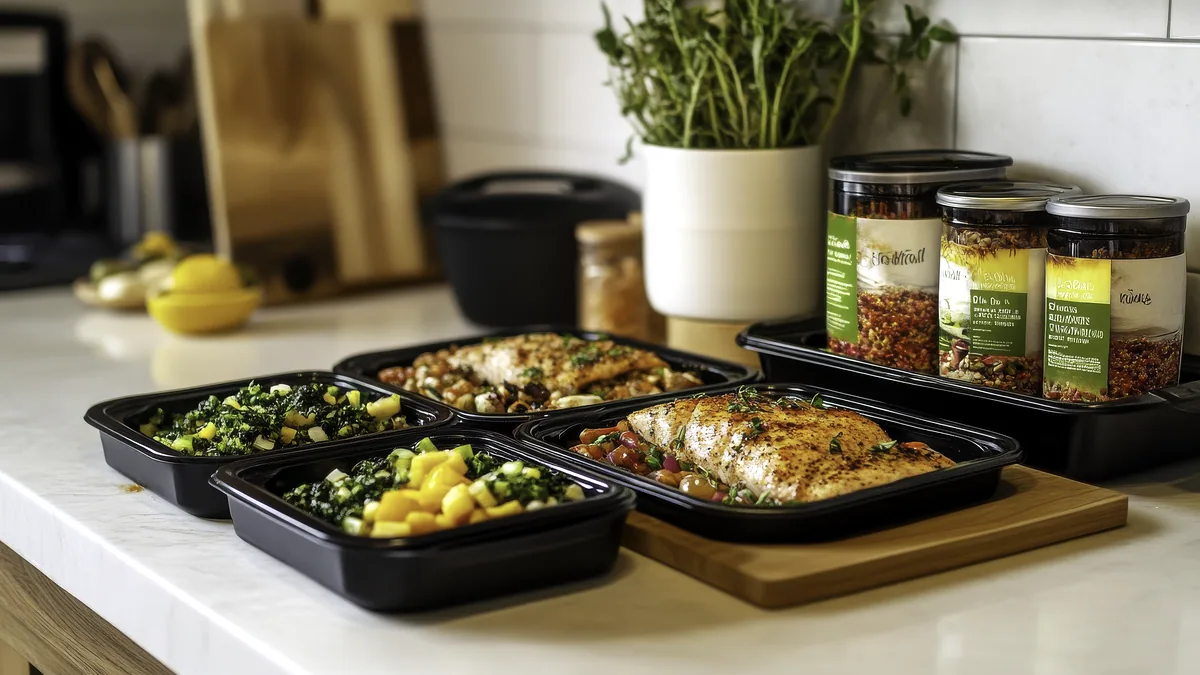
The 5 rules a thyroid-safe weight chart follows
A thyroid-safe weight chart follows 5 rules before it assigns a single calorie. First, it keeps every meal around 25 grams of protein so the 400 to 500 calories per meal stay satiating and the muscles that drive metabolism stay fed. Second, it caps simple sugar at 10 grams a day, because large spikes push the adrenal glands to release cortisol, which competes with thyroid hormones for the same receptors. Third, it spreads fiber to 25 grams a day from beans, lentils, oats and vegetables, so the gut microbiome stays diverse and the conversion of T4 to T3 runs steadily. Fourth, it spaces meals 3 to 4 hours apart to keep blood sugar flat and the 600 to 900 calorie deficit from triggering a crash. Fifth, it flags goitrogenic foods like raw cabbage, kale and soy, and requires them to be cooked, because heating cuts their iodine-blocking effect by about 90 percent. The result of these 5 rules is a template that a patient with Hashimoto's can copy on Monday and trust on Friday.
A 7-day weight loss thyroid diet chart
A 7-day weight loss thyroid diet chart maps the 5 rules onto named meals so a week never depends on inspiration. The table below holds a 1,500 calorie day with roughly 90 grams of protein, 150 grams of carbohydrate and 45 grams of fat, and each day swaps its proteins while the vegetable and fruit slots stay the same so the 25 grams of fiber never drop below 20.
| Day | Breakfast | Lunch | Dinner | Snack |
|---|---|---|---|---|
| Mon | Scrambled eggs, spinach, 1 toast | Grilled chicken salad, olive oil | Baked salmon, rice, broccoli | Greek yogurt, berries |
| Tue | Oatmeal, walnuts, chia seeds | Turkey and quinoa bowl | Chicken stir-fry, bok choy | Apple, 15 almonds |
| Wed | Smoked salmon, cream cheese, toast | Lentil soup, mixed greens | Lean beef, sweet potato, greens | Boiled egg, hummus |
| Thu | Greek yogurt, flax, berries | Grilled shrimp, brown rice, asparagus | Tofu curry, cauliflower rice | Cottage cheese, cucumber |
| Fri | Vegetable omelet, 1 toast | Tuna salad, lettuce wrap | Roast chicken, quinoa, peas | Carrot sticks, 2 tbsp guacamole |
| Sat | Eggs, sauted mushrooms, toast | Black bean and chicken bowl | Baked cod, roasted potatoes, greens | Pumpkin seeds, pear |
| Sun | Pumpkin spice oatmeal, 1 banana | Roast chicken leftovers, rice | Turkey meatballs, zucchini noodles | Dark chocolate, 2 squares |
Two notes on how to read the chart. Cook any raw kale, cabbage or cauliflower rather than eating it in a raw slaw, and keep the 6 to 8 grams of selenium by choosing one of the 4 to 6 Brazil nuts a day that delivers most of it. The chart holds its deficit through the vegetable and fruit slots, so a patient who misses a dinner portion still lands near the 1,500 calorie target instead of sliding far below it.
The foods that speed thyroid weight loss
The foods that speed thyroid weight loss are the ones that feed T4 to T3 conversion, calm the gut, and keep the 1,500 calorie day from feeling like a punishment. Choose them in three groups. The selenium and zinc group, such as 6 to 8 ounces of salmon, 1 egg yolk and 4 Brazil nuts, hands the body the raw material for converting T4 to the active T3. The fiber group, such as 1 cup of cooked lentils, 1 cup of steel-cut oats and 2 cups of broccoli, feeds the gut bacteria that finish that conversion. The protein group, such as 1 cup of Greek yogurt, 4 to 6 ounces of chicken and 1 cup of cottage cheese, holds the 90 grams of protein the chart depends on. These 3 groups turn a list of calories into a body that actually uses its thyroid hormone while it loses weight.
What to limit, and why it matters
What to limit, and why it matters, comes down to 4 families that quietly raise the cost of the same 1,500 calorie day. Simple sugars, such as soda, candy and pastries, should drop to under 10 grams a day, because each spike lifts cortisol and dulls the thyroid's signal. Refined grains, such as white bread and white pasta, should give way to whole grains, because they empty the gut and stall fiber below 20 grams. Excess soy, such as 3 or more servings of tofu or edamame in a day, should be capped, because unheated soy can interfere with the absorption of levothyroxine. Raw goitrogens, such as raw cabbage and raw kale, should be cooked, because heating removes most of their iodine-blocking power. Limiting these 4 families is what lets the chart hold the 300 to 500 calorie deficit without the patient fighting a rising cortisol level at 4 pm.
How to use the chart with your own numbers
How to use the chart with your own numbers starts with the 3 lab values that tell you whether the 1,500 calorie plan is even fair. Keep free T4 between 0.8 and 1.8 ng/dL, keep free T3 between 2.0 and 4.4 pg/mL, and keep TSH between 1.0 and 3.5 mIU/L, and recheck all 3 every 6 to 8 weeks after any medication change. If free T3 sits below 2.0 while TSH looks normal, the conversion step is the bottleneck, and the selenium and fiber sections of the chart become the lever. If TSH creeps above 3.5, the body is under-medicated, and no deficit will land smoothly until the dose is reviewed. Track the 1,500 calorie chart against these 3 numbers for 8 weeks, and the chart stops being a guess and becomes a record of what your thyroid can convert. For the deeper mechanics behind the deficit, read the companion page on Weight and Metabolism in Hashimoto's.
How medication and supplements fit the diet chart
How medication and supplements fit the diet chart is the piece most plans skip, and it decides whether the 1,500 calories land or leak. Take levothyroxine on an empty stomach with water, then wait 30 to 60 minutes before the breakfast row of the chart, because coffee, fiber and calcium each cut absorption by 10 to 30 percent if taken too close. Keep the 20 to 30 grams of fiber from the lunch and dinner rows at least 4 hours away from the dose so the 25 grams of daily fiber never traps the hormone. Add the 6 to 8 grams of selenium as a fixed slot, not a bonus, and keep the calcium and iron in the chart spaced from the tablet rather than stacked on it. The way to make the whole page land is to keep the medication on its own schedule and let the chart carry the weight, and to review the specific doses on the companion page on How Thyroid Medication Affects Your Weight. For the exact supplement list that pairs with the 6 to 8 grams of selenium, see Supplements for thyroid weight loss.
How to track progress on the chart
How to track progress on the chart means measuring 4 signals at set intervals so the 8-week window reads like data instead like mood. Weigh in once a week at the same hour after the chart's 1,500 calories settle, and expect 0.5 to 1 pound off per week, which is the rate the 300 to 500 calorie deficit actually produces. Log the 3 lab values every 6 to 8 weeks and keep the same 3 ranges in view, free T4, free T3 and TSH. Watch the symptom count, such as the 5 or 6 that usually fade first, including the afternoon fatigue, the 2 to 3 pound water retention, the dry skin, the hair shedding, the cold hands and the brain fog, and note the number that drops each month. Change one variable at a time, then wait 8 weeks, because a thyroid that is converting T4 to T3 responds slowly and punishes fast edits. Keep the chart, the 3 numbers and the 4 signals on one page, and the diet becomes a measurement instead of a hope.